

Commercial-Grade Asphalt Crack Filling & Repair in St. Louis & House Springs
Stop water damage before it starts. We inject commercial-grade, hot-pour rubberized sealant into asphalt cracks to lock out moisture, prevent potholes, and save you from the enormous cost of a full repave.
Expert Crack Injection & Pavement Defense
We use hot-pour rubberized injection to seal linear and alligator cracks, preventing destructive water penetration at the source.
Residential Driveway Crack Filling
Protect your home's biggest asset from Missouri's brutal freeze-thaw cycles. We meticulously seal every crack to maintain your driveway's integrity and curb appeal.
Commercial Parking Lot Crack Sealing
Keep your business safe and prevent massive liability issues. Our team efficiently seals large parking lots, minimizing disruption to your customers and operations.
Alligator (Spider) Crack Repair
Address areas of widespread, interconnected cracking before the base fails completely. We clean and flood these critical zones with sealant to bind the pavement back together.
Preventative Pavement Sealing
This is the single most effective maintenance task you can perform. Sealing cracks as soon as they appear is the key to doubling or even tripling your asphalt's lifespan.
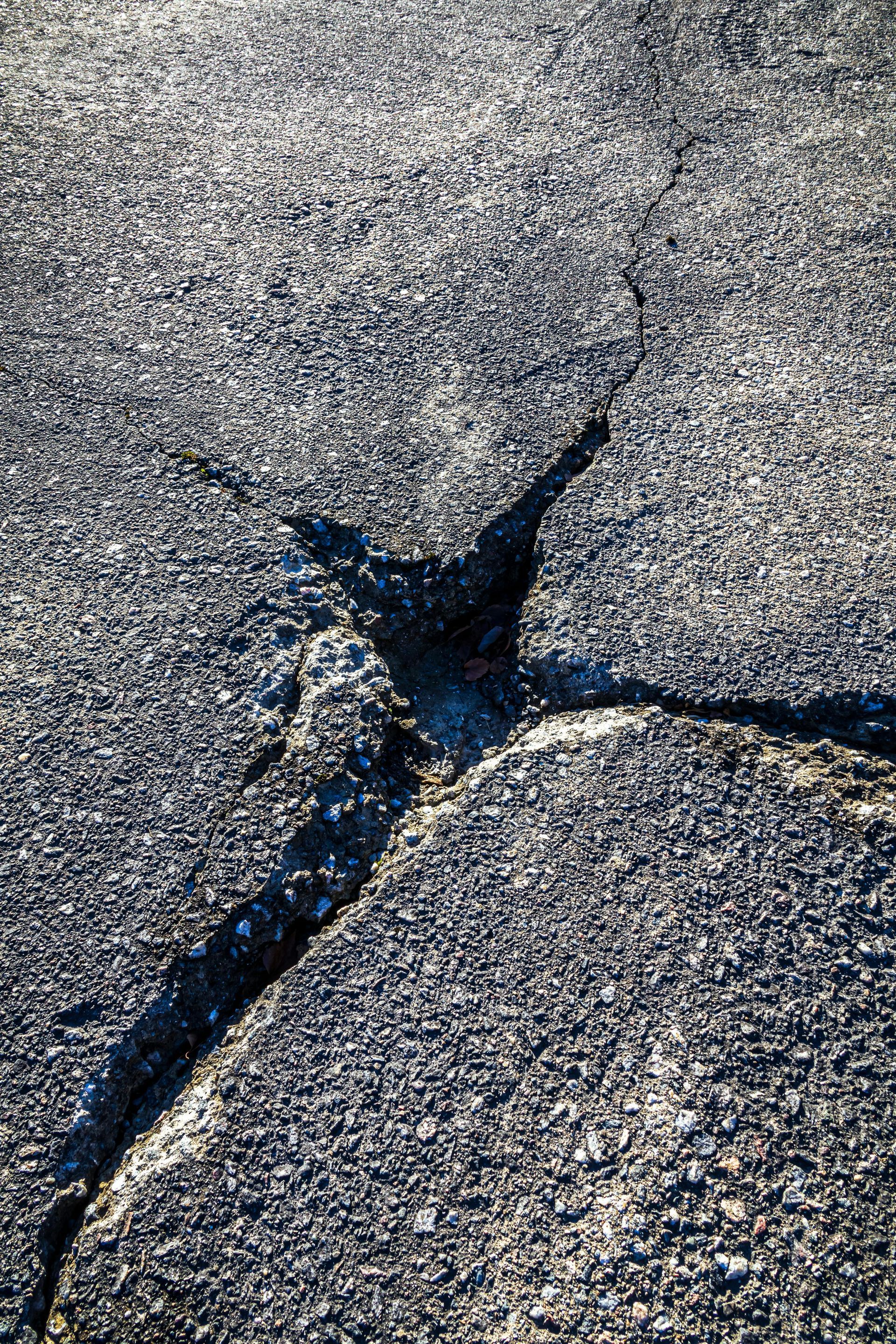
Why Ignoring Small Cracks Leads to Total Base Failure
When water seeps into open cracks and freezes, it expands with enough force to shatter your pavement from the inside out.
Guaranteed Water Infiltration
Every crack acts like a tiny gutter, funneling rainwater directly into the gravel and soil base that supports the entire weight of your asphalt.
Freeze-Thaw Cycle Destruction
In the winter, the trapped water freezes and expands with incredible force, shattering the asphalt from below and turning small cracks into gaping potholes.
Foundation Failure & Potholes
Once the base layer becomes saturated and soft, it can no longer support the pavement. This leads to deep structural failure and the inevitable formation of potholes.
Growing Trip Hazards & Weeds
Unfilled cracks collect debris, encourage weed growth, and widen over time, creating a significant and growing trip-and-fall hazard.
Our Hot-Pour Rubberized Sealing Method
We route, clean, and dry every fissure before flooding it with highly flexible, weather-resistant rubber sealant.
Crack Cleaning & De-Weeding
Using high-powered blowers and wire wheels, we blast all dirt, vegetation, and loose debris out of the cracks to ensure the sealant bonds directly to clean asphalt.
Routing & Preparation (If Needed)
For larger, more significant cracks, we use a specialized machine to "rout" the edges. This creates a small reservoir that allows more sealant to enter for a stronger, more durable repair.
Hot-Pour Sealant Application
We heat our rubberized sealant to over 350°F and skillfully inject it into the cracks. This high temperature ensures it flows to the very bottom and creates a watertight bond.
Final Inspection & Cooling
We lightly squeegee the surface for a smooth finish and inspect our work. The sealant cools and becomes tack-free very quickly, allowing for minimal downtime.
The Result: A Watertight, Resilient Surface
Lock out moisture, stop the freeze-thaw cycle in its tracks, and drastically extend the lifespan of your property's foundation.
Massive Cost Avoidance
The tiny cost of filling a crack today saves you from the thousands of dollars required for patching potholes or completely repaving your entire driveway tomorrow.
Extended Pavement Lifespan
By stopping the cycle of water intrusion and ice damage, you preserve the structural foundation of your asphalt, adding many years to its functional life.
Asphalt Crack Filling FAQs
Common questions from St. Louis property owners about saving their asphalt.
What's the difference between crack filling and crack sealing?
While often used interchangeably, crack "sealing" typically involves routing the crack to create a reservoir for more material, which is ideal for high-traffic lots. Crack "filling" is the direct injection method we use for most driveways.
Can't I just use crack filler from a hardware store?
DIY cold-pour fillers lack the adhesive strength and flexibility of our professional hot-pour rubberized sealant. They often crack and peel out within a single season.
Should I fill cracks before I sealcoat?
Yes, absolutely. Crack filling is a structural repair, while sealcoating is a surface treatment. For best results, all structural cracks must be sealed first.
How long does professional crack filler last?
Our hot-pour rubberized sealant is designed to flex with the pavement's expansion and contraction, typically lasting for 3 to 5 years.
Ready to Stop Cracks in Their Tracks?
Don't let a small problem turn into a total repave. Secure your spot on our schedule with St. Louis's most trusted repair team.
Start Your Crack Sealing Plan
Contact Angelo and Sons Maintenance to lock out moisture and permanently protect your pavement's foundation.
- Hot-Pour Rubberized Sealant
- In Business Since 1989
- Prevents Pothole Formation
- Licensed & Insured Crews
Request Your Estimate
Contact Us
We will get back to you as soon as possible.
Please try again later.